Difference Between Lead and Prospect: You Don’t Know the Real Meaning
Learn the difference between leads and prospects, and discover how to move buyers through your sales funnel. Read now and improve your sales strategy!

If you’re in sales or marketing, you’ve undoubtedly heard both “lead” and “prospect” used interchangeably. No, they don’t. That distinction is important because the following step you do should alter based on where someone is sitting in your funnel.
You squander time treating every lead as a sales-ready prospect. If you treat qualified prospects as early-stage leads, you might slow down negotiations that are ready to move ahead.
What Is the Difference Between a Lead and a Prospect?
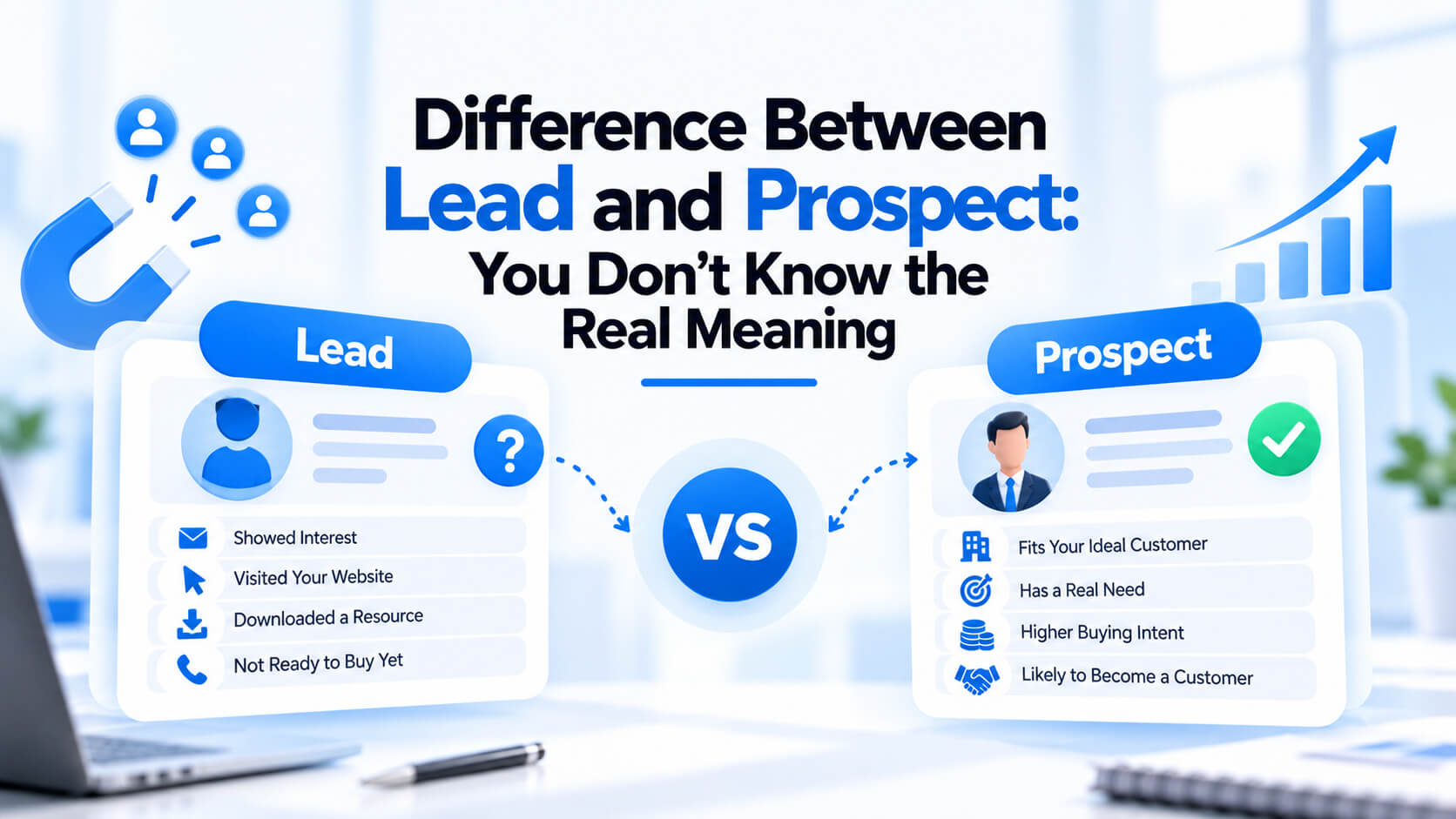
The best way to understand prospect vs lead is through qualification and purchase intent. A lead has shown some interest or is in your database. A prospect is a qualified potential buyer who is a better match for your organisation.
Salesforce calls prospects “leads that have been qualified based on criteria such as industry, budget, and buying timeline so they’re more likely to convert.”
- A Lead Shows Initial Interest
A lead could have downloaded a guide, registered for a webinar, visited your website, replied to outreach, or entered your CRM via another channel.
By now you know something about the individual, yet there may be critical questions that remain unanswered. Is there really a necessity? Is this the correct person to decide? Is their firm a match for your ICP? Any purchase intention? This ambiguity is what differentiates a lead from a qualified sales prospect.
- A Prospect Has Been Qualified
A possibility is farther ahead. You have enough to feel the individual or account warrants aggressive sales attention. A prospect, as Cognism defines it, is a qualified lead that fits your target customer profile and has engaged in a meaningful way. Two-way communication is especially crucial since it provides your team with a greater knowledge of purpose.
- A Sales Opportunity Comes Later
Never confuse a potential with an opportunity. An opportunity often indicates a more solid prospective transaction, since a prospect may be a match for your target demographic and eager to talk. There may be an existing need, discovery call, demo, price conversation, proposal or purchase process happening.
Why Does the Prospect vs Lead Difference Matter?
Understanding what is the difference between lead and prospect helps you decide how much time to invest and what type of communication the person should receive.
- Leads Need Nurturing
A lead may need education before a direct sales discussion may take place. You may provide valuable material, case studies, product information, newsletters or lighter follow-ups to see if any interest develops.
You’re not trying to close the transaction right now. That's to see whether that lead has enough fit and purpose to proceed further.
- Prospects Need More Focused Conversations
When someone becomes a prospect, your communication should become more precise. You may talk about the business challenge, requirements, use case, purchase criteria, objections, timescales and future actions. At this level, discovery calls, demos, and tailored follow-ups become more relevant.
- Qualification Protects Your Sales Team’s Time
Your team is wasting important time on individuals who may never purchase, because everyone in your CRM receives the same amount of sales attention.
Clear qualification means you can concentrate on the best prospective relationships, rather than just pursuing the biggest possible database.
How Do You Turn a Lead Into a Prospect?
A lead becomes a stronger prospect when you establish both fit and meaningful engagement. Your exact criteria will depend on your business, but the process should be consistent.
- Check Their Fit With Your ICP
Take into account firm size, industry, job, location, business model, use case and other variables that identify your ideal consumers.
Remember that interest does not equal fit. Someone could interact with your material but not have any actual use for your goods.
- Look for Stronger Intent Signals
Someone getting closer to a purchasing discussion is someone who responds, engages several times, asks for a demo, asks for price, is active on your profile, or shows direct interest. Don’t judge a contact on a single signal. Strong qualification blends behaviour and customer fit.
- Build a Two-Way Conversation
A reply gives you information a contact record doesn't. When someone answers inquiries, describes an issue, responds to outreach, or agrees to talk, you can better understand the situation and determine whether the lead fits your active prospect pipeline.
What Is the Difference Between Lead Generation and Prospecting?
Lead generation vs prospecting are connected to lead qualifying however, these phrases refer to actions, not contact phases.
Lead generation is almost always about developing or attracting attention. Prospecting is more proactive in discovering and reaching out to prospective buyers. Below we have covered the difference between lead generation and prospecting:
- Lead Generation Creates Potential Demand
Lead generation might include SEO, content, webinars, landing sites, social media, events, forms, and other activities that put prospective buyers into your funnel.
The objective is to raise awareness and identify people who could become eligible consumers.
- Prospecting Is More Direct
Sales-driven and focused prospecting happens more often. You find people/accounts who suit your ICP and reach out directly via LinkedIn, email, calls, social selling or other channels. “Prospecting is more one-to-one and sales-focused than broader lead-generation activity,” Cognism says.
- You Need Both to Build a Healthy Pipeline
Lead generation helps you find prospective consumers. Prospecting is the act of proactively finding, qualifying and engaging individuals you want to sell to.
When you combine the two you can grow your exposure and yet have focused sales discussions instead of waiting for every customer to come to you first.
Conclusion
A lead is not just a name in your CRM, it's not just a name difference. It’s the fit, qualification, engagement and purchase readiness underlying it.
At Linkziy, we help you manage that trip from within your LinkedIn development process. You can collect leads from Sales Navigator searches, posts, groups, events, datasets, or LinkedIn URLs, augment them with verified contact information, and use AI to score prospects against your ICP.
From there, you can start AI-personalised outreach sequences and manage replies from a single inbox that sorts interactions as hot, warm, or cold. This enables your team to spend less time on addressing every contact the same and more time on the prospects with the best fit and purpose.
If LinkedIn is a big part of your B2B sales strategy, Linkziy provides you one solution to go from lead discovery to qualifying interactions without sewing together many unrelated technologies.
FAQs
Q1. What Is the Difference Between a Lead and an Opportunity?
A lead is someone who shows interest in your product or service, such as by filling out a contact form. An opportunity is a qualified potential deal where there’s a real chance of making a sale. In simple terms, a lead shows interest, while an opportunity represents a possible sale.
Q2. What Is the Difference Between a Lead and a Prospect in Sales?
A lead is someone who might be interested in your product or service, but you don’t know much about their needs yet. A prospect is a lead who has been qualified and matches your ideal customer profile. Prospects are generally more likely to move forward in the sales process.
Q3. What Is the Difference Between a Lead and a Prospect?
The main difference is how qualified the person is. A lead is someone who has shown initial interest in your business, while a prospect is someone who fits your target audience and has the potential to become a customer. Sales teams qualify leads to identify prospects worth spending more time on.