Inbound vs Outbound Sales: The Difference You’re Missing [2027]
Explore inbound vs. outbound sales, compare their pros and cons, and discover how to combine both strategies. Build a stronger sales pipeline today!

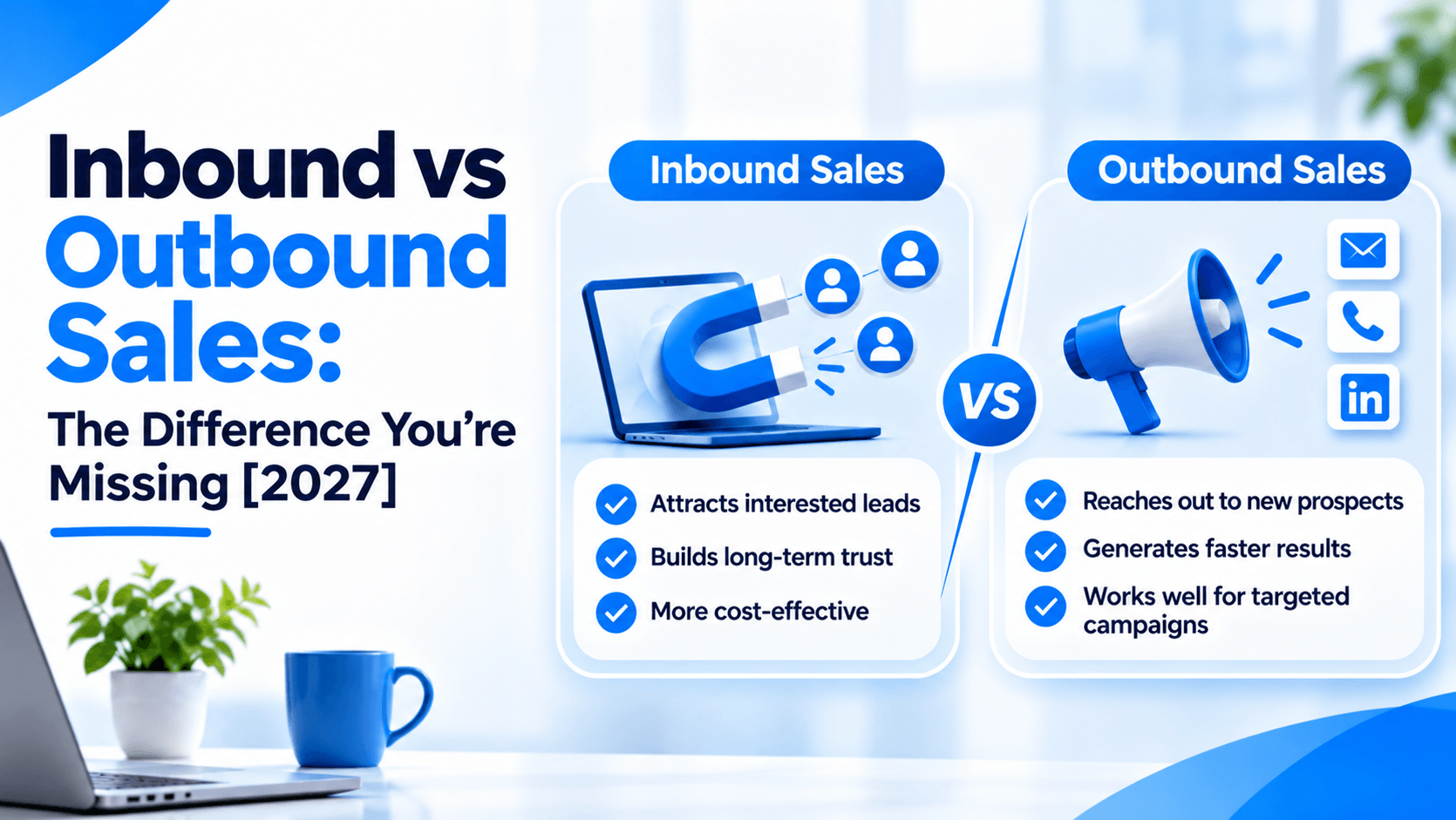
Do you have potential customers but have trouble converting them or are you making calls to potential customers who do not often answer? It may be due to your sales strategy. Many businesses focus on attracting interested buyers or actively contacting new prospects, without considering how to combine both strategies.
The concept of inbound vs outbound sales can be a critical insight when you need to create a consistent pipeline, enhance lead quality, and create future-proof sales. Both these are techniques to transform prospects into customers but there are certain differences in their way of starting a conversation, qualification of leads and the method of approaching buyers by sales teams. This guide covers their differences, pros, cons, and how you can use them concurrently in 2027.
What Is Inbound Sales?
Inbound sales refers to customer based strategy where potential customers contact you after learning about your business, services or products. They can discover you using search engines or social media, education content, or referrals, or on the internet by advertisement.
It is your work to comprehend their needs, respond to their inquiries and direct them to an appropriate answer. These prospects are already interested, so you can start conversations with a clearer understanding of their needs.
Common inbound sales channels include:
- Content marketing and SEO: Be attractive to the people striving to find a solution to certain issues.
- Website inquiries: Connect with visitors who request demonstrations, consultations, or product information.
- Referrals and social media: Engage prospects who discover your business through recommendations or relevant content.
Benefits and Challenges of Inbound Sales
By using inbound sales, you can develop trust before your sales first conversation and get interested in actively researching solutions. Valuable content may earn interest in the long term thus making it a good long-term investment.
However, inbound sales depends on your ability to attract the right audience. Content creation, search engine optimization, and lead nurturing require consistent effort. You can also get questions of curious people who are not prepared or qualified to purchase.
What Is Outbound Sales?
Outbound sales is proactive in nature. Your sales team does not wait to be contacted by the potential customers but rather identifies the various relevant prospects and starts talking to them via means that include cold emailing, telephone and LinkedIn outreach.
This strategy can be effectively employed when you desire to determine particular companies, decision-makers or market segments that might otherwise not learn about your business.
As an example, when providing software to emerging technology businesses, research businesses that fit your ideal customer profile and send their relevant decision-makers a personalized message.
Benefits and Challenges of Outbound Sales
Outbound sales provides more possibilities to control whom you target and the time of commencing prospecting. It can assist you to break into new markets, propose new solutions to which you are not familiar and build opportunities with companies not yet attracted.
Nevertheless, prospects might not be willing to respond when you call them.
Reputation and following-up to the point of death can hurt your reputation and lower response rates due to generic messages and poor targeting. Attractive outbound sales necessitates research, appropriate messaging and an organized follow-up procedure.
Inbound vs Outbound Sales: Key Differences
The main difference between inbound and outbound sales is who takes the initiative to start the conversation. Inbound starts with a prospect's interest, while outbound starts with outreach from your team. The difference between inbound and outbound sales influences how you qualify leads, communicate value, and allocate resources.

Inbound Versus Outbound Sales: Which Should You Choose?
The decision of selecting either inbound or outbound sales, is dependent on your business model, target audience, available resources and objectives of growth. You should not simply select one; consider what you require in your business.
1. Choose Inbound for Demand Generation
A good fit to inbound sales is when your customers are active seekers of the solutions and require educational resources before they make a decision. It enables you to gain credibility with valuable content and attract the current demand.
2. Choose Outbound for Targeted Prospecting
Outbound sales would also be successful when you are an expert on what business or decision-maker you are targeting. It is especially useful when the B2B company is entering a new market, or delivering the products of high expertise to a specific audience.
3. Combine Both for a Stronger Pipeline
The integrated strategy will assist you to capture interested prospects as well as actively engage potential customers who are yet to learn about your business. Trust is achieved inbound content and outreach outbound can also be used to initiate appropriate conversations with target prospects through a carefully selected outreach approach.
For example, a potential client may learn about your company through a helpful article, while your sales team also reaches out to other companies with similar needs. These two methods open opportunities, however, on a different level of a purchase cycle.
How to Improve Your Inbound and Outbound Sales Strategy in 2027?
An effective sales plan goes beyond creating leads. You should know which activities generate qualified opportunities and what interactions advance the prospects toward a decision.
Start by defining your ideal customer profile so your marketing and sales teams target businesses that genuinely fit your offering. Measure metrics like qualified leads, meeting conversion, length of sales cycle, cost of customer acquisition and revenue.
Then, customize your message. In the case of inbound prospects it is best to act fast and customize discussions according to what they have to say. With outbound prospects, conduct your research on their business, form their issues, and demonstrate why your solution can be beneficial.
Lastly, periodically review performance. Act on your findings to narrow down audience targeting, enhance messaging, and deploy resources on channels that create valuable customer relationships.
Conclusion
The actual inbound vs outbound sales lesson is that you do not have to necessarily choose one at the expense of the other. Inbound will assist you in drawing and developing eager customers, whereas outbound will provide you with the opportunity to target interested prospects on the proactive level.
When both strategies assist the same customer profile and business targets, then you can accomplish a more balanced sales line.
Given that you wish to optimize your LinkedIn prospecting and outreach, Linkziy's combine LinkedIn outreach tool & prospecting tool ,prospecting campaigns, content creation, and conversation management within a single platform.